An Accessibility Checklist for Planning a Cruise
An accessible cruise planning checklist helps you confirm cabin features, ship access, boarding assistance, medical needs, and shore excursion options before booking. CruiseTourScottsdale.link uses these checks to help travelers plan an accessible cruise with clearer expectations.
Written by Wendy Denny
Request an EstimateOur team applies this checklist across the full cruise journey, from booking through shore travel. Author: Wendy Denny.
Accessible cruise planning works best when personal needs match the cruise line’s cabin, ship, boarding, and excursion details.
What Should an Accessible Cruise Checklist Cover?
An accessible cruise checklist should cover the traveler’s mobility, sensory, medical, communication, cabin, boarding, and excursion needs.
The checklist should connect the traveler’s needs with the cruise line’s actual policies. It should also cover the accessible cabin, ship accessibility, shore excursions, and boarding assistance.
Before You Book: Check Your Accessibility Needs
Before booking, list every need that could affect movement, communication, health, or daily activities.
We use this list to help organize questions for the cruise line. Clear details can make the booking process easier to manage.
What Accessibility Needs Should You Tell the Cruise Line About?
Tell the cruise line about every need that affects cabin access, boarding, daily activities, emergency support, or shore travel.
Include mobility limitations, hearing access, vision access, service animal needs, medication, oxygen equipment, and dietary requirements. We encourage travelers to describe how each need affects practical tasks, not only name a diagnosis or device.
How Do You Book an Accessible Cruise Cabin?
Book an accessible cruise cabin by matching the cabin’s listed features with the traveler’s actual mobility and bathroom needs, then confirming those details with the cruise line.
Ask about an accessible stateroom, wheelchair-accessible cabin features, door width, turning space, grab bars, lowered fixtures, and a roll-in shower. Check whether an accessible balcony works with the traveler’s mobility aid and whether the cabin location supports easy access to elevators and public areas.
We recommend keeping the cruise line confirmation with your booking records. Cabin descriptions can vary by ship, so the exact vessel and stateroom matter.
During Booking: Confirm the Ship and Cabin
During booking, confirm that the cruise ship and assigned stateroom support the traveler’s complete access plan.
Public areas can affect the experience as much as the cabin. Ask focused questions about routes, facilities, and emergency procedures before you finalize plans.
Are Cruise Shore Excursions Accessible?
Cruise shore excursions may be accessible only when the route, transport, walking surface, transfer process, and equipment rules match the traveler’s needs.
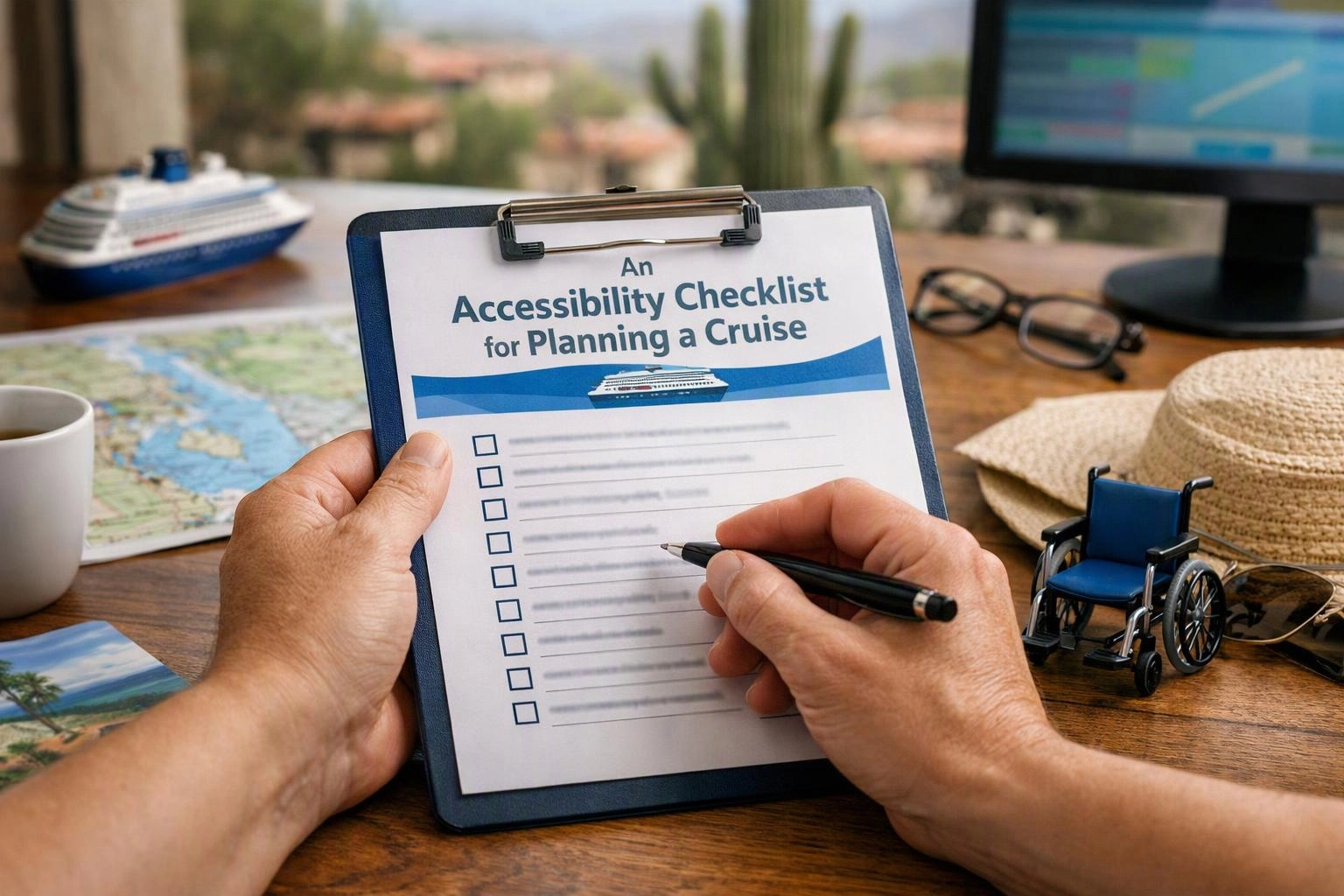
Ask whether the port uses accessible transportation and whether the tour vehicle can carry a wheelchair or scooter. Confirm paved routes, transfer requirements, restroom access, and the amount of walking involved.
A tender port may require a transfer from the ship to a smaller boat. The cruise line’s port accessibility rules may affect whether mobility equipment can be used during that transfer.
Before Embarkation: Arrange Boarding Assistance
Arrange boarding assistance by recording the request with the cruise line, confirming the port process, and carrying the required travel and medical information.
Boarding assistance may involve help at the port terminal, an accessible route, or support with a mobility aid. We recommend confirming where to report and which cruise documents staff will need.
Ask whether accessible transport can reach the terminal and whether your special assistance request appears in the cruise line confirmation. Keep medical information and mobility equipment details easy to access during embarkation.
During the Cruise: Use the Accessibility Plan
During the cruise, use the accessibility plan to keep routes, assistance, and daily activities organized.
Our team suggests reviewing the plan with the ship crew after boarding. Small route questions are easier to address before an activity or shore excursion begins.
After Booking: Reconfirm Before Departure
After booking, reconfirm the accessible cabin, assistance request, shore excursion details, and travel documents before departure.
Review the booking confirmation against the traveler’s current needs. We also recommend checking medical information and equipment details after any health or mobility change.
A final review can identify differences between the planned cabin, ship facilities, and excursion arrangements. Keep the cruise line confirmation available with other travel records.
After Booking: Complete Your Final Accessibility Check
The final accessibility check confirms that the booking details still match the traveler’s needs.
Use the following list when organizing your travel folder and preparing for embarkation.
Accessibility Red Flags to Resolve Before Sailing
Accessibility red flags should be resolved before sailing because they can affect the whole journey.
We treat unclear answers as a reason to ask more focused questions. A written cruise line confirmation can make the plan easier to follow.
How We Help You Plan an Accessible Cruise
We review the traveler’s access needs, match them with cruise and excursion details, and help organize questions for the cruise line.
Our team can help connect an accessible cabin with ship facilities, boarding assistance, and shore excursion conditions. We also help travelers organize cruise documents and important medical information.
Readers can explore our cruise agency services for related trip planning support. Our goal is to help each traveler build a clearer cruise vacation plan.
Questions About Accessible Cruise Planning
Can wheelchair users go on a cruise?
Yes, wheelchair users can go on a cruise when the ship, cabin, boarding process, and shore plans support their needs. Confirm accessible routes, bathroom features, emergency support, and excursion conditions before booking.
Can I bring a mobility scooter on a cruise?
Yes, a mobility scooter may be allowed when it meets the cruise line’s equipment and storage rules. Confirm cabin space, charging needs, public route access, and tender port restrictions before sailing.
What should I pack for an accessible cruise?
Pack travel documents, medication, medical equipment information, mobility aid supplies, emergency contact details, and cruise line confirmations. Keep essential items easy to reach during embarkation and daily activities.
Can a service animal travel on a cruise ship?
Yes, a service animal may travel when the cruise line’s service animal policy is met. Tell the cruise line early and confirm documentation, relief areas, port rules, and shore excursion conditions.
What happens if a cruise port is not accessible?
If a cruise port is not accessible, the traveler may need to remain onboard or choose a different excursion. Ask about tender transfers, accessible transportation, walking surfaces, and equipment restrictions before selecting shore activities.